
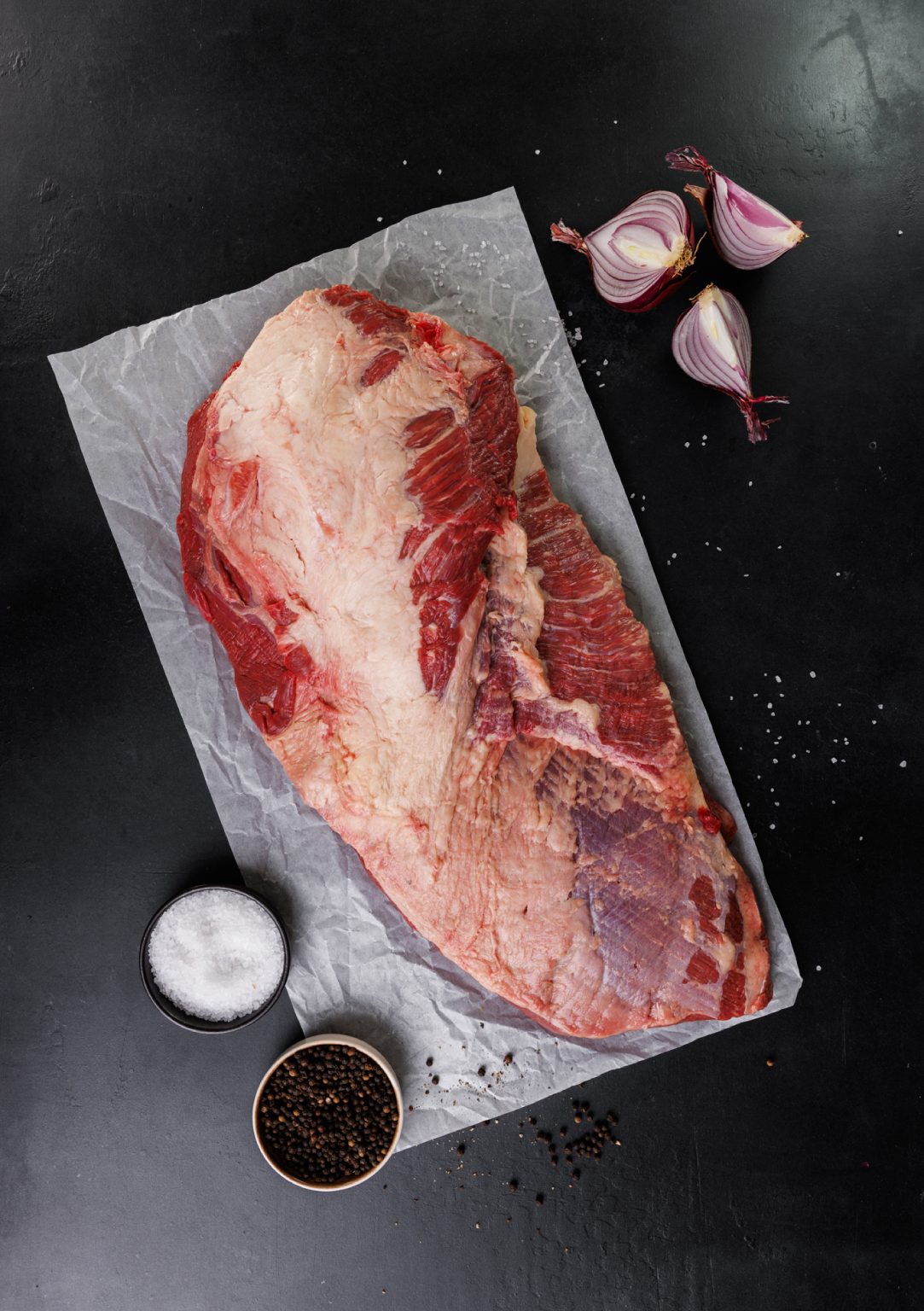
Brisket has gone from a forgotten budget cut to the most talked-about piece of beef in the country, and for good reason. Treated properly, this hard-working muscle from the breast of the animal transforms into something no fillet can match: deep, beefy flavour, a glossy bark and meat so soft it barely holds together. Treated badly, it is a chew you will not forget.
The difference between the two is not skill so much as patience. Brisket follows simple rules, and once you know them, it is genuinely difficult to ruin. In this guide we cover the three best ways to cook a brisket at home, in the oven, in the slow cooker and on a smoker or barbecue, with timings and temperatures for each.
Brisket comes from the breast of the animal, the muscle that carries much of its weight. That work builds two things: rich flavour and a lot of connective tissue, and all that collagen is why brisket cannot be rushed. Cook it fast and the tissue stays tight and rubbery. With slow cooking, hold it at a low temperature for long enough and that collagen melts into gelatine, which is what turns brisket tender and gives great brisket its wobble, moisture, and deeper flavour.
Our whole halal Angus brisket is cut from HMC certified, grass-fed Angus beef, reared on farms in the UK and Ireland and prepared in our own cutting plant in Leicester. Grass-fed Angus matters here: brisket is a cut where the quality of the animal shows up directly in the depth of flavour, because there is nowhere for bland beef to hide over an eight-hour cook.
A whole brisket is made up of two muscles, the leaner flat brisket and the fattier point, separated by a seam of fat. For most home cooks a rolled or flat-cut piece between 1.5kg and 3kg is ideal. Look for an even layer of fat across the top, roughly the thickness of a pound coin. That fat cap bastes the meat for hours and can always be trimmed at the table. Good marbling and fat also help the meat stay moist and build flavour during the long cooking time.
Allow around 250g of raw brisket per person, more if you want leftovers, and trust us, you want leftovers. If you run a restaurant or takeaway and go through brisket at volume, our wholesale team supplies whole briskets by the box.
Oven brisket is the method we recommend first, and oven braising is the best name for it, because it works in any kitchen and needs no equipment beyond a deep roasting tray and foil.
The strained tray juices, skimmed of fat, make a gravy that needs almost nothing done to it.
The slow cooker is brisket’s best friend on a working day, and slow cooker beef brisket is ideal when you want a hands-off method. You lose the bark, but you gain eight unattended hours and meat you can pull apart with two forks.
Sear the seasoned brisket in a pan first, then lay it on top of sliced onions in the slow cooker pot. Add 250ml of stock, or a mix of stock, tomato purée and Worcestershire-style sauce, and cook on low for 8 to 9 hours or high for 5 to 6. You are looking for the same test as the oven: a skewer that slides in without argument, because slow cooked brisket only becomes tender brisket after enough time in the pot. Longer cooking this way is part of the process that breaks down connective tissue.
Slow cooker brisket is made for pulling. Shred it through the juices and pile it into soft rolls or brioche buns with slaw, fold it through flatbreads with pickles and garlic sauce, or serve it over rice. If your family prefers burgers to buns, the same slaw and pickles sit just as happily on our Angus burger patties.
Smoked brisket is the version that built Texas barbecue’s reputation, and a kettle barbecue with a lid will do the job with a little management.
Set the barbecue up for indirect cooking at 110 to 130°C, with coals banked on one side and a water pan under the meat. Add a few chunks of oak or hickory. Smoke the brisket fat side up, keeping the lid closed as much as you can, and expect around 90 minutes per 500g.
Somewhere around 70°C internal, every brisket stalls. The temperature stops climbing, sometimes for two hours, as moisture evaporating from the surface cools the meat. Do not panic and do not crank the heat. Either wait it out or wrap the brisket tightly in foil or butcher’s paper, which pushes it through the stall and protects the bark from bitterness.
Pull the brisket off at 90 to 95°C internal, then rest it, wrapped, in a cool box or a switched-off oven for at least an hour. Long rests are the most underrated step in barbecue; competition cooks hold briskets for four hours or more.
However you cooked it, slice brisket across the grain. The muscle fibres in brisket are long and coarse, and cutting across them shortens every fibre to the length of a single bite. Slice with the grain and even a perfectly cooked brisket eats tough. Look closely at the direction of the lines in the meat before the first cut, and aim for slices about the thickness of a pencil. On a whole brisket, be aware that the grain changes direction between the flat and the point, so turn the meat as you go.
Rich meat wants freshness and acidity alongside. A sharp slaw, pickled red onions, charred corn, proper chips, and other seasonal vegetables all earn their place. A spoonful of our chimichurri cuts through the richness brilliantly. For a British spin, slices of oven brisket with mashed potato or roast potatoes, greens and the tray gravy make a Sunday dinner that gives roast topside a serious rival; it is a hearty dish and an easy meal to put on the table.
Leftovers keep for three days in the fridge and freeze well. Reheat slices gently in the juices, never in a dry pan, and any brisket with potatoes can be turned into another meal.
Once the low-and-slow bug bites, you will find similar ideas in our other brisket recipes and braising guides, and the same method family covers some of the best value cuts in beef. Angus short ribs braise into something spectacular, beef ox tail makes the richest stew you will ever eat, and our Thor’s Hammer bone-in shin is the ultimate slow-cooked centrepiece. You will find all of them in our halal beef range.
How long does it take to cook a brisket?
In the oven at 150°C, allow roughly 1 hour per 500g plus resting, though exact timing depends on the joint. In a slow cooker, 8 to 9 hours on low. On a smoker at 110 to 130°C, allow around 90 minutes per 500g plus at least an hour of resting.
Is brisket halal?
Brisket is simply a cut of beef, so it is halal when the animal was slaughtered according to Islamic requirements. Every brisket we sell is 100% HMC certified, which means independent inspectors monitor the entire process.
Should brisket be cooked fat side up or down?
Fat side up in the oven and slow cooker, so the rendering fat bastes the meat. On a barbecue with fierce heat from below, some cooks go fat side down as a shield. Up is the safe default.
Why is my brisket tough?
It is undercooked, not overcooked. Tough brisket almost always needs more time for the collagen to break down. Put it back in, covered, and test again after 45 minutes.
Should I marinate brisket first?
You can leave it overnight in a dry spice rub loosened with a little oil if you want extra flavour, though it is optional: long, gentle cooking will tenderise the meat well on its own.
Can I cook brisket with extra vegetables?
Yes, add vegetables around the meat for the final part of the cook so they soften without turning mushy. They also help build flavour in the tray juices.
What should I serve with brisket for a roast-style plate?
Serve it with gravy and your favourite roast sides for a delicious meal. Properly rested brisket has incredible flavour, so simple potatoes and greens work well alongside it.
Can I reheat or finish brisket in the oven?
Yes, cover it and warm it gently with a little of its cooking liquid so it does not dry out. This also works well if you want to finish sliced portions before serving.
Can I cook brisket the day before?
Yes, and many cooks swear it improves overnight. Cool it in its juices, refrigerate, then slice cold and reheat gently in the liquid the next day.
Al Barakah Meats has been supplying Leicester with HMC halal beef since the 1980s, from our shop counter to restaurants and nationwide franchises. Order our whole Angus brisket online with nationwide delivery, free locally on orders over £60, or reserve one for click and collect from Leicester Food Park. Trade and catering enquiries are always welcome through our wholesale page.