
Wagyu has a reputation as the finest beef in the world, and the first question many Muslim food lovers ask is a fair one: can I actually eat it? The short answer is yes. Wagyu is beef, and like any beef it is halal when the cattle are raised on permissible feed and slaughtered according to Islamic law. The longer answer involves a few persistent myths about sake massages and beer-fed cattle, the difference between Japanese and British-reared wagyu, and what a certification logo does that the word “halal” on a menu cannot.
As Leicester’s HMC halal butchers, we sell halal wagyu every week, so this is a question we can answer from the cutting room rather than the comment section.
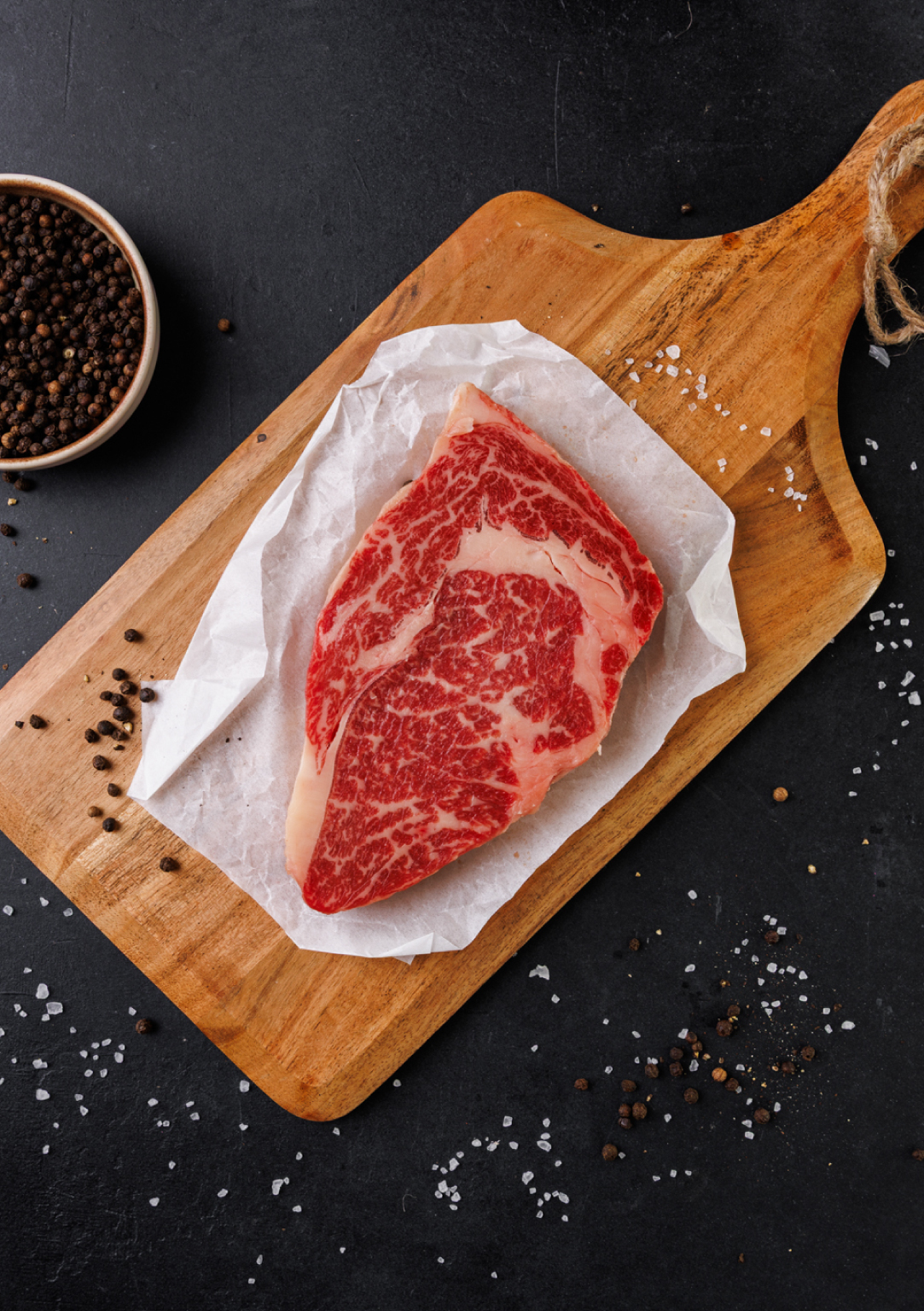
Wagyu simply means “Japanese cattle”, and it refers to a group of highly marbled cattle breeds developed in Japan over centuries. What makes the breed famous is marbling: fine threads of fat laced through the muscle itself rather than sitting around its edge. That intramuscular fat melts as the steak cooks, basting the meat from within. It is why wagyu is more tender, more buttery and more intensely savoury than ordinary beef, and why it commands the price it does.
Wagyu genetics are now farmed well beyond Japan. Australian, American and British herds raise wagyu and wagyu-cross cattle, which is what makes halal wagyu possible at all, since the animals can be reared and slaughtered under halal-compliant conditions from start to finish.
Three concerns come up again and again, and two of them are mostly myth.
The sake massage story. You may have heard that wagyu cattle are massaged with sake or fed beer to improve the meat. These tales attach to a handful of traditional practices in particular regions of Japan, and they are not how modern wagyu is produced at any scale; at most, a few producers may have used beer to stimulate appetite, but that is not standard practice today. More to the point, reputable halal wagyu producers do not use alcohol anywhere in the process. The cattle behind our wagyu range are raised on natural feed with no alcohol involved in rearing or processing.
The feed question. Islamic dietary principles extend to how an animal is raised, and cattle fed on impermissible substances are a legitimate concern. Halal-certified wagyu programmes use grain and forage-based feeding, which is monitored as part of certification.
The slaughter question. This is the one that genuinely decides the matter. However the animal was raised, wagyu is only halal if it is slaughtered as Islam requires: a healthy animal at the time of slaughter, a Muslim slaughterman, the tasmiyah pronounced, a single swift cut and full drainage of blood. Authentic Japanese imports rarely meet this standard, which is why most halal wagyu in the UK comes from wagyu herds reared and slaughtered outside Japan under halal supervision.
So the honest answer to “is wagyu halal?” is: wagyu as a breed, absolutely, and whether it counts as halal food depends on certification. A specific wagyu steak is halal as long as its slaughter and handling were halal, which is exactly what certification exists to verify.
Every cut in our wagyu collection is 100% HMC certified halal beef. The Halal Monitoring Committee independently inspects and monitors the entire chain: the animal, the slaughter itself, performed by a Muslim without stunning, and the tagged carcass through cutting and packing. The wagyu then comes to our own HACCP approved cutting plant at Leicester Food Park, where our butchers portion it fresh, vacuum pack and seal it. No non-halal meat enters our facility, so there is no risk of cross-contamination between the abattoir and your door.
That traceability and oversight are what many customers want when buying premium halal meat.
If you want the full picture of what HMC monitoring involves, our guide to what makes meat halal explains the process step by step.
Wagyu is not one product; different cuts suit very different meals, and the halal steak range is wider than most people expect.
For the full steak experience: the halal wagyu rib eye is the cut we recommend first, with marbling running right through its centre. The wagyu strip loin, the sirloin of the wagyu world, offers a firmer bite and a cleaner beef flavour, while the wagyu fillet steak is the most tender cut on the animal.
For the showstopper: the halal wagyu tomahawk is a rib eye on its full bone, and quite possibly the most dramatic thing you can put on a table. Our guide to cooking a tomahawk steak walks through it.
For slow cooking: wagyu short ribs braise into something extraordinary, the marbling doing the work a sauce normally has to.
For everyday luxury: wagyu mince and wagyu burger patties are the affordable way in, and honestly some of the best burgers we have ever eaten. Wagyu beef strips and diced wagyu lift a quick stir fry or curry without any change to your recipe.
When people talk about wagyu grades, they usually mean marbling scores. Japanese graders score beef from 1 to 12 on the Beef Marbling Standard, with the famous A5 label denoting the top band of yield and quality. Australian and British wagyu programmes use similar marbling scores, typically quoted from 4 or 5 upwards for cross-bred herds and higher for full-blood animals.
Two practical things follow from this. First, marbling score matters more than the word wagyu on its own, because a lightly marbled wagyu-cross steak and a heavily marbled one are quite different products. Second, richness scales with the score: a very highly marbled steak is a 150g experience, not a 300g dinner. That is why we portion our wagyu steaks at 10oz, a size that balances indulgence against wagyu’s intensity for one very good dinner or a generous meal for two.
The honest summary is that halal wagyu in the UK will not carry a Japanese A5 stamp, because that stamp belongs to beef slaughtered in Japan. What it can carry is excellent marbling, full HMC certification and complete traceability, which for a Muslim steak lover is the combination that actually matters.
Wagyu’s fat is its flavour, so the aim is to render it gently rather than incinerate it.
Bring the steak to room temperature for 30 minutes and season with salt only. Heat a heavy pan to medium-high rather than screaming hot; wagyu fat has a lower melting point than ordinary beef fat and renders quickly. You will not need oil, as the steak provides its own within seconds. Cook a 10oz wagyu ribeye for around 2 to 3 minutes a side for medium rare, basting with the rendered fat, then rest it for 5 minutes.
Because wagyu is so rich, portions can be smaller than you would plan for ordinary steak. One 10oz rib eye, sliced after resting, comfortably serves two people and still feels special every time alongside salad, rice or chips. Resist the urge to add butter or heavy sauces; a little flaked salt and perhaps a bright herb sauce is all it wants.
Against standard beef, wagyu differs mainly in marbling, tenderness and richness. Against our grass-fed Angus range, the comparison is closer than the price gap suggests, because well-marbled Angus cuts like the rib eye cap spinalis share some of wagyu’s buttery quality. And if what you are chasing is depth of flavour rather than richness, our dry-aged beef takes grass-fed Angus in a different direction entirely, concentrating and deepening the taste over weeks of careful ageing. We wrote about why dry-aged Angus beef is worth trying if you want the detail.
Our advice to first-timers is simple: start with a wagyu rib eye and a dry-aged rib eye side by side, and discover which direction your taste runs. There is no wrong answer.
Is wagyu beef halal in Islam?
Yes, provided the cattle were raised on permissible feed and slaughtered according to Islamic law. The breed itself presents no issue; the production chain is what matters.
Are wagyu cattle fed beer or massaged with sake?
Not in any mainstream modern production, and never in halal-certified programmes. These stories come from isolated traditional practices and make for better legend than fact.
Is Japanese A5 wagyu halal?
Almost never, as beef slaughtered in Japan does not typically meet halal requirements. Halal wagyu is reared from wagyu genetics and slaughtered under halal supervision elsewhere. Ours is HMC certified from start to finish.
Is halal wagyu worth the money?
For a special occasion, we think so, and the entry points are gentler than people expect. A pack of wagyu burger patties is an ideal first order if you want to try wagyu without buying a larger steak, and it costs little more than a takeaway while still delivering a dinner you will talk about.
Where can I buy halal wagyu in the UK?
Right here: you can order online for convenience, with our full halal wagyu range cut fresh in Leicester and delivered nationwide, plus free local delivery over £60 and click and collect from Leicester Food Park.
From a single rib eye to a tomahawk for the whole table, every piece of wagyu we sell carries the same guarantee as everything else at Al Barakah Meats: 100% HMC certified, prepared fresh by our own butchers, and good enough for our own families. Explore the wagyu collection or browse the full online shop to add premium cuts like wagyu ribeye to your basket.